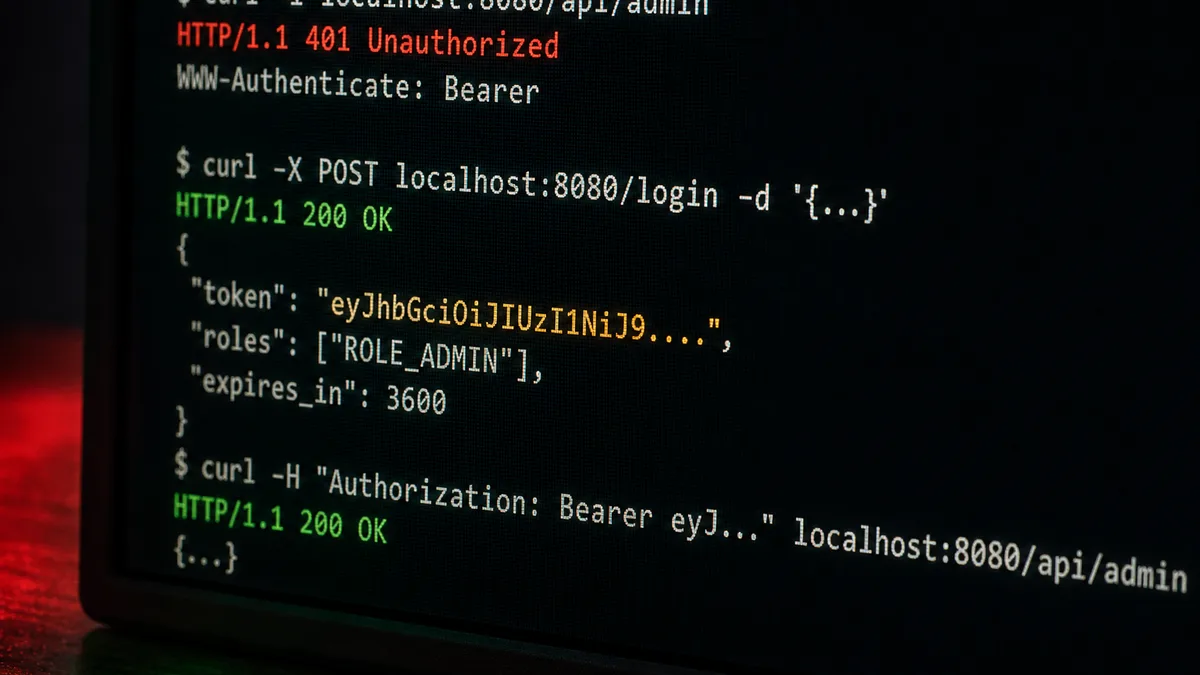
JWT
A signed token, its cryptographic pitfalls, and its unavoidable flaw.
Authentication with JWT
JWT is presented everywhere as the modern authentication solution, and that reputation has a real basis: a signed token lets any service verify an identity without querying a database or sharing a session. For an architecture spread across several services, that is a considerable gain.
That same property is also its central flaw, and the point on which almost all tutorials stay silent: a JWT cannot be revoked. It is valid because its signature is valid, and that signature remains valid until the expiration written into the token. If a token leaks, if you fire someone, if a user changes their password after being compromised, the token keeps working. A server-side session, by contrast, can be deleted.
There are mitigations — short expiration, refresh token, blocklist — but each one reintroduces some of the state that JWT claimed to eliminate. Choosing JWT means accepting this trade-off knowingly, not avoiding the need to think it through.
This lesson therefore covers the token itself: its structure, its signature, the two classic attacks against naive implementations, its integration into Spring Security, and an honest treatment of client-side storage and revocation. The code uses Spring Boot 3, Spring Security 6, and Java 17.
Comments
Comments are powered by GitHub Discussions
Sign in with GitHub to join the discussion